Mirny Mine
There are many prolific diamond mines in the world, some more famous than others – such as the Cullinan in South Africa or the Jubilee in Russia, but none of them quite compare to the magnificent Mir (or Mirny) mine in Eastern Siberia.
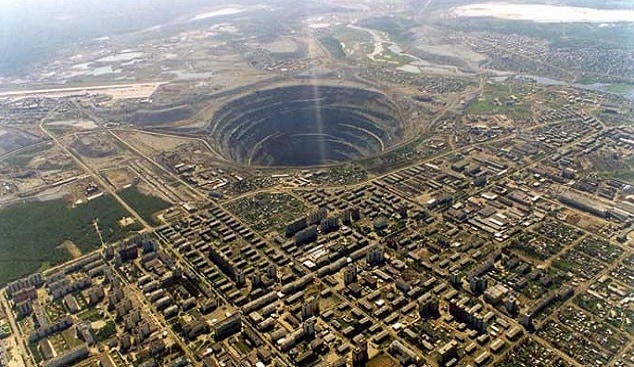
Running 525 meters deep, with a diameter of 1,200 meters, Mir is the second largest excavated hole in the world – with an entire city dedicated to its operation and bearing its name, perched right on it. The air space above the pit is closed now, following rumored but unsubstantiated incidents of helicopters being sucked downwards. No crashes, however, were ever reported.
Mir’s kimberlite deposits were discovered in 1955 – the second such find in Russia after the Zarnitsa mine in 1954. Two years afterward, the development of the mine began – weathering extreme climate conditions such as seven months of winter freeze, ground turned to slush in the summer, and the covering of all equipment in the mine so it wouldn’t freeze during the night.
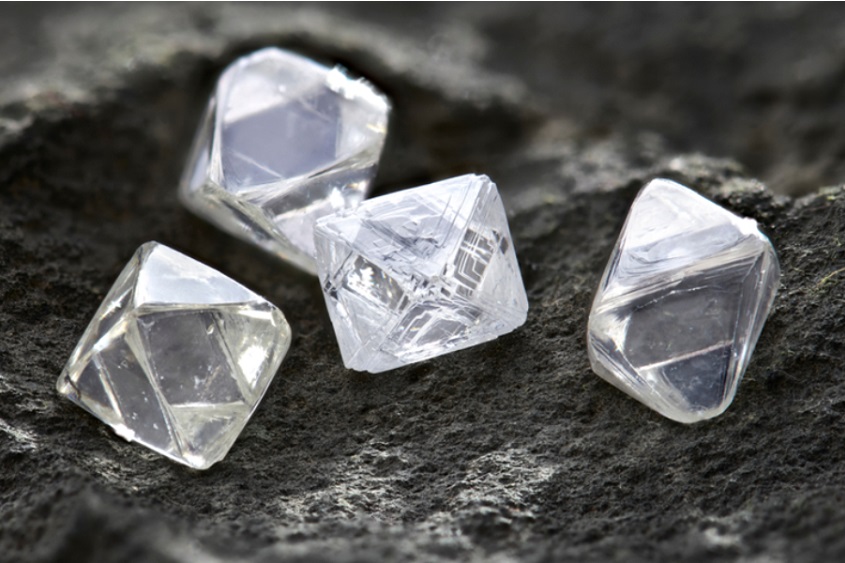
In the 1960s, Mir was already producing 10,000,000 carats of diamonds per year, of which one fifth was of gem quality. In the 1970s, construction of a network of tunnels for underground diamond recovery began. By 1999, the project operated exclusively as an underground mine. Between 1957 and 2001, when it operated as an open pit mine, Mir produced $17 billion worth of rough diamonds.
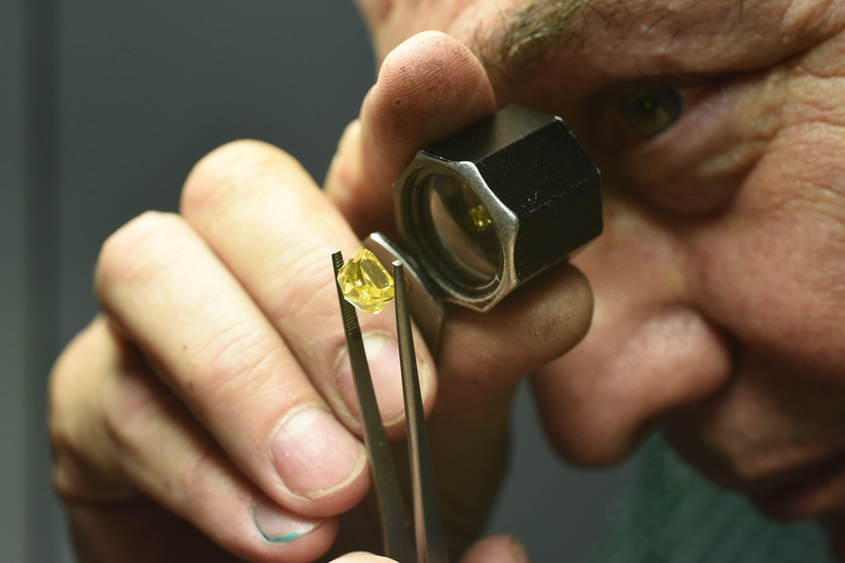
Today, the aggregate length of the mine tunnels and workings is well in excess of 10 kilometers. In 2014, the underground tunnels in Mir produced more than six million carats of rough diamonds. Mir continues to produce impressive diamonds; in May 2015, for instance, Russian mining giant Alrosa recovered a 78.02 carat diamond from the mine.
FAQ The Amazing Story of the Mir Diamond Mine
What makes the Mir diamond mine so remarkable in terms of size and scope?
The Mir (or Mirny) mine in Eastern Siberia is the second largest excavated hole in the world, running 525 meters deep with a diameter of 1,200 meters. What makes it even more extraordinary is that an entire city bearing its name was built right on the edge of this massive pit, dedicated specifically to the mine’s operation. The mine is so large that the air space above it is now closed due to rumored incidents of helicopters being sucked downwards by air currents, though no crashes were ever officially reported.
How did the Mir mine overcome extreme climate challenges during its development?
The Mir mine faced extraordinary climate conditions including seven months of winter freeze annually and ground that turned to slush during summer months. To operate under these harsh conditions, all equipment had to be covered at night to prevent freezing. Despite these challenges, development began in 1957, just two years after the kimberlite deposits were discovered in 1955, making it the second such discovery in Russia after the Zarnitsa mine in 1954.
What was the production capacity and value of diamonds from the Mir mine?
During its peak in the 1960s, the Mir mine was producing an impressive 10,000,000 carats of diamonds per year, with one-fifth being of gem quality. Between 1957 and 2001, when it operated as an open pit mine, Mir produced $17 billion worth of rough diamonds. The mine continues to be highly productive – in 2014, the underground tunnels produced more than six million carats of rough diamonds, and notable finds like a 78.02 carat diamond recovered by Alrosa in May 2015 demonstrate its ongoing significance.
How did the Mir mine transition from open pit to underground operations?
The transformation of the Mir mine began in the 1970s when construction started on a network of tunnels for underground diamond recovery. By 1999, the mine had completely transitioned from open pit operations to exclusive underground mining. Today, the aggregate length of the mine’s tunnels and workings exceeds 10 kilometers, representing a massive underground infrastructure that continues the mine’s legacy of diamond production beneath the iconic surface pit.