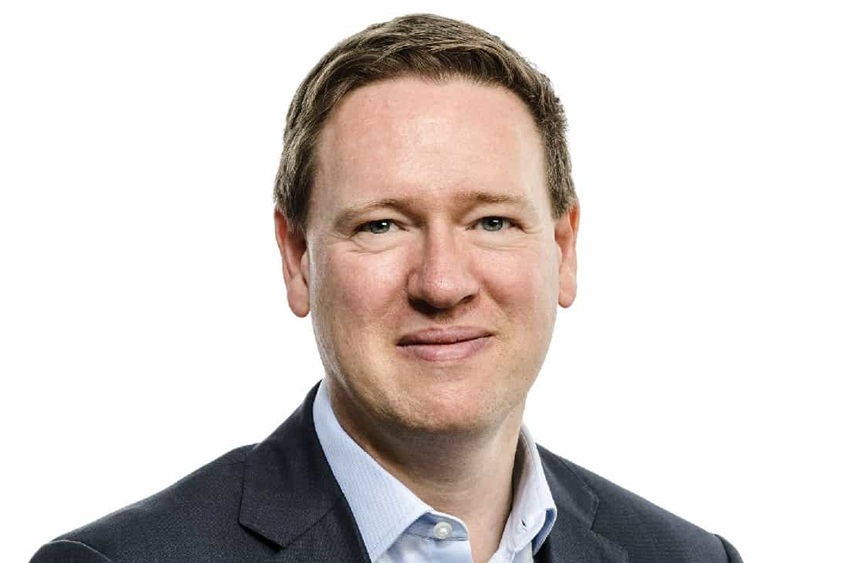

“Our clients have to see that we are manufacturing. Manufacturing is an essential part of every diamond company,” Andre Messika explained when he received the Outstanding Exporter Award a few months ago. And these are not just words: in early July he opened a factory, adding another link to his value chain.
Open Sesame. Yoram Elbar walks ahead of me in the underground parking lot of the Diamond Tower. We proceed gingerly among the cars until we reach a white steel door, adorned with an elegant signature. When we press the bell and hear the buzzer, a magic cavern opens before us: a sparkling diamond polishing plant. Andre Messika’s “boutique” factory is another link, added to strengthen the value chain: independent manufacturing, in addition to manufacturing through contractors (since 2006), purchase of rough at tenders and participation in the sight of a sightholder in South Africa, marketing polished through offices in Ramat Gan, Paris, Antwerp and Hong Kong and the Andre Messika jewelry brand, founded by his daughter, Valerie, who lives in Paris, which has been covered in the most prestigious magazines. “All you need now is a mine,” I told Andre Messika with a smile. “No, no, no,” he answered. Despite the triple negative, I wouldn’t take this as the final world. Time will tell.
Manufacturing as Marketing
When Andre Messika immigrated to Israel he had already become a well-established diamantaire in Paris. He came to Israel as a Zionist, and therefore he set himself a Zionist goal: not to suffice with marketing abroad, but to get his clients to come to Israel: “In the early years of the 21st century, the volume of buyers coming to Israel to buy polished here declined. We wanted to persuade them to come. This was a lengthy process. A piece that the French television made on one of my major customers who visited me in Israel was particularly helpful. It generated a change in consciousness. Customers began coming and buying, not only from me, but from everyone. It’s just as my father taught me: if you want to be in the sun and not the shadows, you have to share. That’s the only way to succeed,” Andre Messika told us upon receiving the Outstanding Exporter award (see issue Hayahalom 213).
Now, observing the new factory through the glass gate on the mezzanine floor, he continued to develop the topic: “We understood that in order to get clients to come to Israel we had to offer them the maximum in all respects: security, service, competitive prices, confidence in the product and transparency. From my point of view, the factory is an upgrade – the creation of another attractive marketing tool, conveying the right message to our clients.”
The Rough Challenge
The term challenge is politically correct, but Andre Messika doesn’t mince his words: “Our greatest problem is obtaining rough at suitable prices. The rough producers want to maximize their profits and don’t take the other participants along the diamond value chain into account. But one can fight over rough. The prices fluctuate,” he said, making a wave-like gesture. “You can wait for the right time and buy only then. The most important thing is to stay onboard, because if you get off the boat, you won’t be there when it sails. I believe in waiting, waiting to get rough at the right price and using the right tool – the factory – because the rough producer wants to know you’re a professional who knows how to get the most out of its rough.
My idea was not to delay building a factory until we had rough at the right price. I believe there’s room in Israel for a good factory with good polishers and good technology, and if we get the rough at the right price we can remain on the map. Perhaps I’m too optimistic, and perhaps I’ll be one of those who fall, but I am a believer. If the Israeli diamond center concentrates only on buying polished, that will be the beginning of our end. You ask how one can get rough at the right price? The answer is simple: If Israel represents a large market with major players, the wind will turn in our favor. If we move in the right direction and present a high-standard work tool – expertise in rough, manufacturing and marketing – we will be a significant player.”
A Factory in the Building
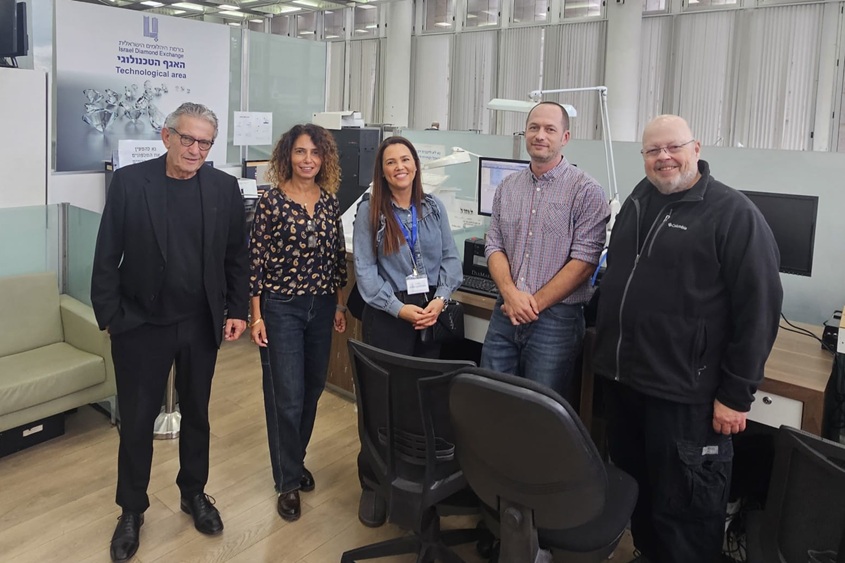
“We built the factory in the diamond complex itself in order to be different and also to be very close to the offices,” Messika explained. Thanks to Moti Ganz, we saw an opportunity and told ourselves: let’s do it. I don’t consider myself a manufacturer. I received a great deal of help from Moti Ganz, who is a friend, brother and mentor to me. We built the factory thanks to his professional knowledge. We chose Yoram Laniado as our main contractor; he has vast experience in building factories. Brigadier General (Res.) Yoram Elbar, a member of my wife’s family, is heading the project. I always dreamed of his working for me, and at the beginning of the year, after serving 25 years in the Prime Minister’s Office, he has joined us as head of the group’s security system. One of the first projects I gave him was building the factory.”
The Building Process
“We broke a record. We set up a high-standard factory within just three months, including meetings and planning with all the relevant bodies in the Exchange. We paid particular attention to three issues,” Yoram Elbar told us.
1. “A green factory: We invested a great deal of time and thought into equipping the factory with sophisticated systems that create a healthy work environment. For example, we have a system that extracts 80-90 percent of the dust and replaces the air in the factory with fresh air 60 times an hour. And that doesn’t mean bringing in air from the parking lot – it’s clean air from outside.
2. Professional training: Imparting knowledge is an integral part of Messika’s vision. We will teach diamond professions in two tracks: one is a year-long training course in diamond polishing. We already have one apprentice. The aim is to be training two polishers at any given time.
The second track consists of short four-day courses for the buyers of our clients, to teach them where things begin and where they end. The course will include familiarization with diamond processing, from the state of rough to manufacturing and finally, marketing from the office. At the end of the course, the buyers will receive a certificate. When they return to their employers, they can market the diamonds with even greater love, accompanied by deeper and more extensive knowledge.
3. The staff spirit. The third task we set ourselves is to create a staff of a high professional level, suited to the way we work. The core polishing staff includes experts in Excellent cut – Yariv Nitzan, a veteran of 25 years in diamond manufacturing, Arik Desner and Andre Messika’s youngest son, Ilan.”
Equipment and Manufacturing
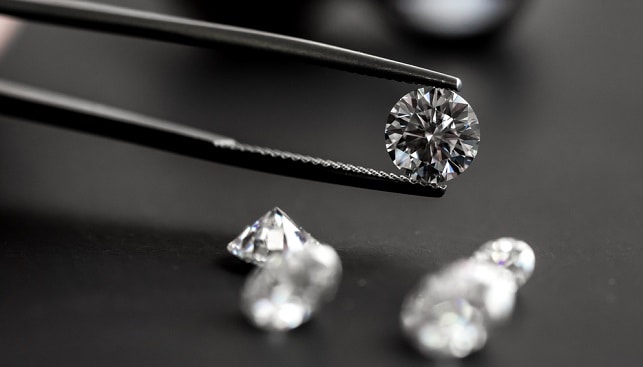
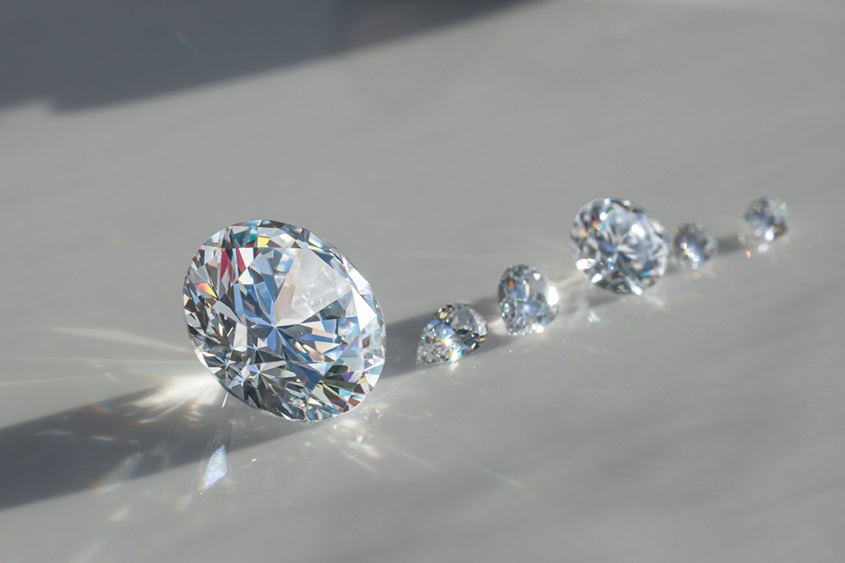
Andre Messika polishes white and yellow diamonds from two carats up, in all shapes. The boutique factory will be focused on manufacturing from five carats up to very large sizes, such as the 250-carat rough now being processed there. The standard of finish, Messika told us, is Triple X for rounds and a minimum of VG for fancy.
The equipment includes American polishing wheels produced by Bentel Israel, an OGI system for rough and a Sarin system for polished. In the future there will also be a Israel-made bruting machine. “For ideological reasons we make every effort to assure that most of our equipment is Israeli-made,” Elbar says.
In order to fully realize the concept of manufacturing for the sake of marketing, Andre Messika photographs everything that happens in the factory and posts it online to the clients, like a chef who prepares a meal in front of the guests. “I am not creating a revolution. I just want a beautiful tool for my beautiful company,” he summed up.
By: Shira Ami